
The decision between Meta Ads or TikTok Ads for your video campaign depends mainly on your target audience and goals. As a general rule, Meta (Facebook and Instagram) is better suited for businesses targeting a mature audience (30+) with its advanced targeting capabilities for generating leads and conversions. TikTok, on the other hand, is the preferred choice for boosting brand awareness and achieving viral reach among a younger audience (18-34).
This guide was written especially for small business owners who want a simple, practical understanding of which platform will give them the best return on their video advertising budget. We won't speak in buzzwords; instead, we'll dive into a practical comparison to help you make an informed decision.
- Target Audience: Meta is strong with the 30+ age group, while TikTok dominates among younger audiences.
- Objective: Meta excels at lead generation and conversion campaigns; TikTok is great for reach and awareness.
- Cost: Cost per impression (CPM) on TikTok is often lower, but cost per lead (CPL) depends on the quality of the creative.
- Creative: TikTok demands authenticity and trendiness; Meta is more forgiving of polished, commercial content.
- Alignment: Success lies in matching your message, style, and offer to the right platform for you.
To understand which platform is better, it's important to recognize the fundamental difference between them. Meta's platforms (Facebook and Instagram) are based on a social graph. You see content from friends, family, and pages you've chosen to follow. Advertising there is sometimes seen as an interruption, so the ad needs to be highly relevant.
TikTok, however, operates on a content graph. Its algorithm shows users videos it thinks they'll like, regardless of who created them. Users are in a 'discovery' mode and are more open to new content. A good video ad on TikTok feels like just another video in the feed, not an advertisement.
The main consideration in your choice is the age and profile of your customer. If your business targets a relatively mature audience, families, or professionals in specific fields, you'll likely find them on Facebook and Instagram. Meta's advanced segmentation options allow you to reach these audiences with surgical precision.
If your product or service appeals to Gen Z and young millennials (ages 18-34), TikTok is an arena you can't ignore. The audience on this platform is active, engaged, and ready to embrace new trends and brands that speak their language. Advertising on TikTok allows you to reach this audience in its natural environment.
Many business owners focus on the cost per thousand impressions (CPM). According to general estimates, the CPM on TikTok tends to be lower than on Meta, meaning you can get more eyes on your content for the same budget. But impressions aren't the most important metric for a small business.

The critical metric is the cost per lead (CPL) or cost per conversion. Here, the picture is more complex and highly dependent on the quality of your creative, your offer, and your landing page. A tight video campaign on Meta can bring in high-quality leads at a low cost, while a viral campaign on TikTok can generate a massive number of leads at a negligible cost, though their quality might be lower. The key is to test and measure.
| Characteristic | Meta Ads (Facebook/Instagram) | TikTok Ads |
|---|---|---|
| Primary Audience | 30+ (Wide age range) | 18-34 (Gen Z & young millennials) |
| Cost per Impression (CPM) | Medium-High (Estimate) | Low-Medium (Estimate) |
| Main Campaign Goals | Leads, conversions, community building | Reach, brand awareness, trends |
| Recommended Creative Style | Polished, high-quality production, UGC | Authentic, trendy, "behind-the-scenes" |
On both platforms, the winning format is vertical video (9:16 aspect ratio), optimized for full-screen viewing on a smartphone. However, there are differences in the style and content that viewers expect.
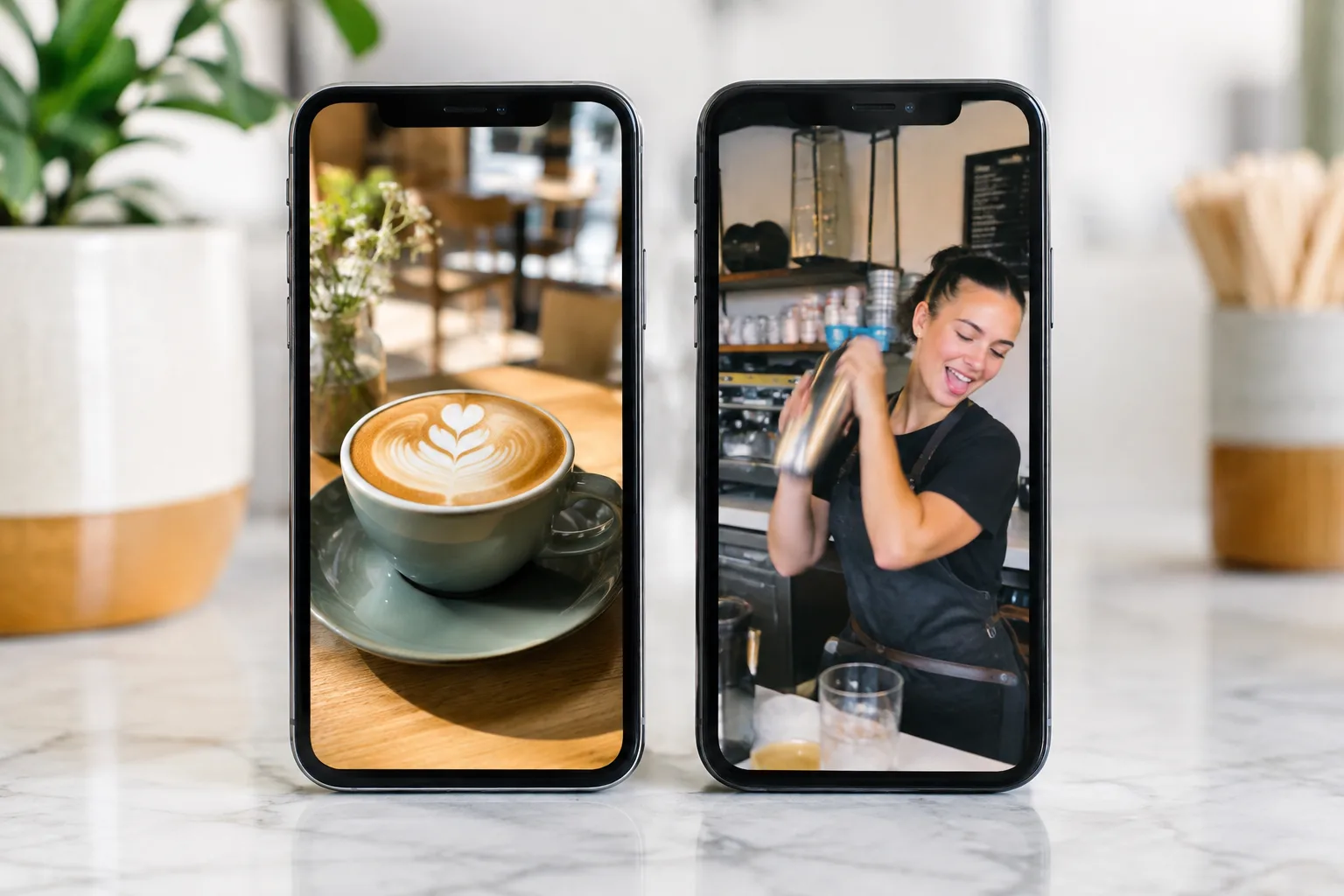
On Meta, short Reels and Stories (15-60 seconds) work great. You can use videos that show product demonstrations, customer testimonials, or a quick explanation of your service. There's more tolerance for content that looks polished and "like an ad." On TikTok, however, the key is authenticity. Videos should feel as if they were created by a regular user, use trending sounds, and present the business in an accessible and fun way.
- Grab attention in the first 3 seconds with a strong visual hook or an intriguing question.
- Adapt the video for viewing without sound by adding clear, readable captions.
- Stick to a vertical format (9:16) that fills the entire mobile screen.
- Showcase your brand or product early, but in a natural, not pushy, way.
- Include a clear call to action (CTA) that tells the viewer exactly what to do next.
- Test different video lengths to see what works best for your audience.
- Use user-generated content (UGC) or authentic testimonials to build trust.
- Create multiple variations of the same video (with different hooks or CTAs) to run A/B tests.
One of the most common questions we hear from business owners is: "I don't have the time or resources to shoot and edit videos all the time." This is a real struggle. Both platforms require fresh content at a high frequency to stay relevant, which can be exhausting for a one-person business.
The need for diverse creative for A/B testing only increases the challenge. Creating multiple versions of each ad, adapting the style for Meta and TikTok, and consistently producing new content requires a whole marketing setup. This is where new technologies can change the game.
In an age of information overload, a good video ad isn't the one that shouts the loudest, but the one that tells the right story to the right person at the right time.
The LunSoul Social Team
Now that we understand the differences, it's time to take action. Instead of spreading yourself thin, focus on the following steps to ensure a smooth and effective start for your first video campaign.
- 1. Define Your Goal and Audience: Decide what you want to achieve (Leads? Awareness?) and who your exact customer is. The answer to this question will naturally guide you to the more suitable platform.
- 2. Pick One Platform and Focus on It: Don't try to be on both Meta and TikTok at the same time if your resources are limited. Start with one, learn it inside and out, get results, and only then consider expanding.
- 3. Use Automation for Content Creation: Instead of spending hours on shooting and editing, AI-based platforms like LunSoul Social can automatically generate videos customized for your business, complete with voiceovers and digital presenters, ready for advertising on both platforms. This allows you to focus on running your business while your marketing runs efficiently.