
This guide to Facebook lead campaigns for small businesses is designed to help you acquire new customers directly from the social network. The goal is to collect contact information (leads) from interested individuals using a dedicated form, precise audience targeting, and a predefined budget. An effective campaign brings in high-quality leads at a low cost.
This guide was written especially for you, the small business owner. We won't speak in marketing jargon. Instead, we'll provide practical, simple tools for setting up your first lead campaign, explain how to avoid common mistakes, and reveal how new technologies can save you time and money.
- Lead quality is more important than quantity.
- Video ads lower the cost per lead and help filter your audience.
- A lead form that's too short can bring in irrelevant inquiries.
- Automation and AI can significantly streamline the process.
- There's no 'magic price' for a lead—the cost depends on the industry, audience, and ad.
For small businesses, every new customer is significant. A Facebook lead campaign is one of the most effective tools for acquiring them. Instead of advertising into the void, you're directly addressing people who have expressed interest, collecting their details, and can then make personal contact. It's a controlled and measurable way to grow your business.
The main advantage is that everything happens within Facebook. The user sees an ad, clicks, fills out a form where most details are already auto-filled, and submits. This seamless process increases the likelihood of getting inquiries and turns your advertising into a machine for generating business opportunities.
Before you spend a single dollar, define your campaign's objective. Do you want phone calls? To schedule consultation meetings? Sign-ups for a mailing list? A clear goal will help you focus your message. Then, think about your target audience—age, location, interests. The more precise you are, the more you'll reach the right people.
This is where the magic happens. You can use an image, a series of images (carousel), or a video. While an image can catch the eye, a video allows you to tell a story, explain your value, and build initial trust with the viewer. As we'll see later, video has a decisive advantage in improving lead quality.
Facebook's Instant Form is where you'll collect the details of interested people. Be sure to ask only for the information that is essential to you: name, phone number, and email are usually enough. If you're getting irrelevant inquiries, consider adding a simple qualifying question, like 'Which service are you interested in?'. This can dramatically improve the quality of your leads.
Many business owners are reluctant to create video because they don't like being on camera or don't have the right equipment. The good news is that today, you don't have to. Artificial intelligence (AI) technologies allow you to create professional videos with digital presenters and voiceovers in your language, no camera needed.

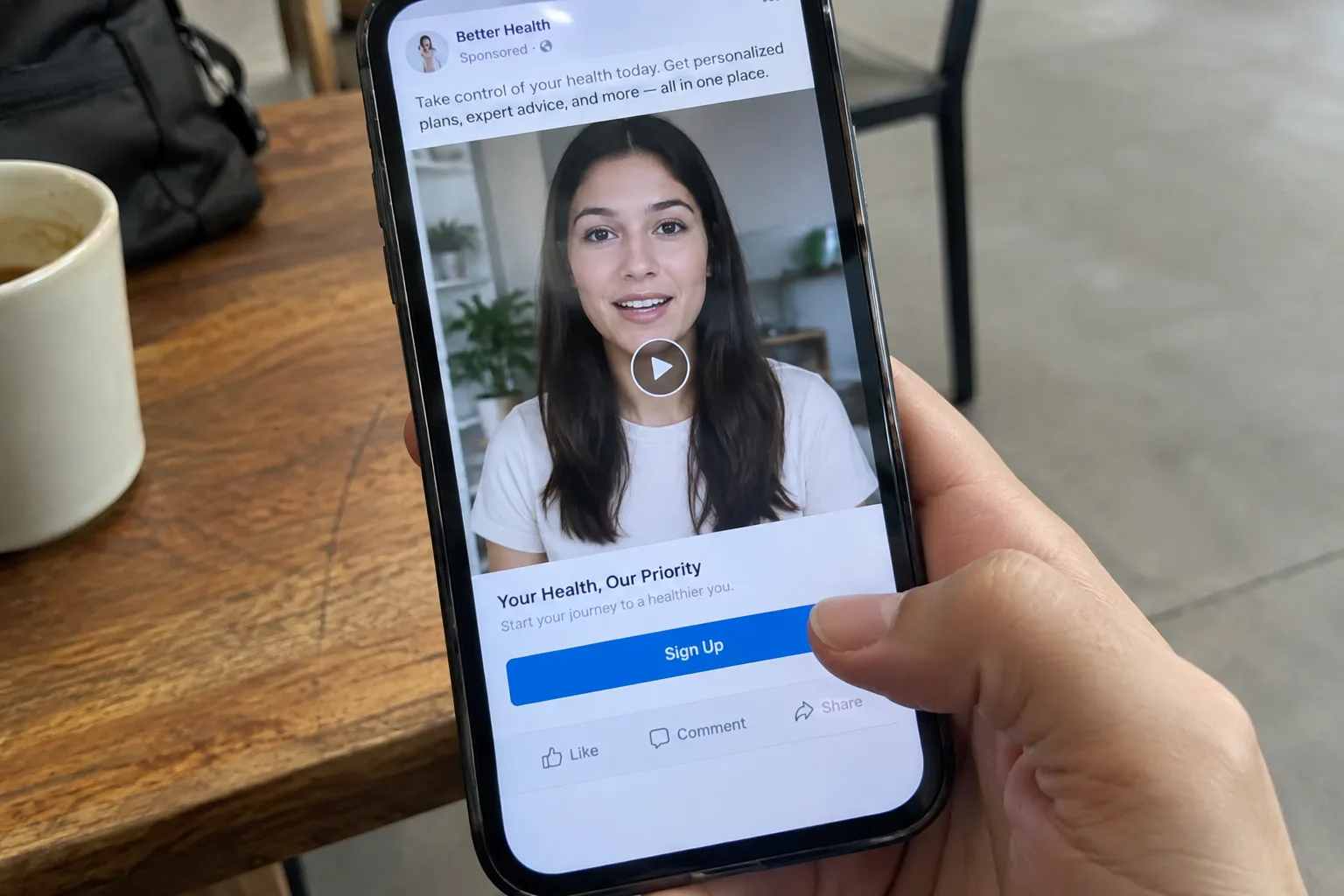
Why is video so effective? A video allows you to convey a more complex message than an image. It builds trust, filters out irrelevant customers (someone who watched to the end is likely more serious), and ultimately lowers the cost per lead. Our internal data analysis shows that videos with a digital presenter achieve a significantly lower average cost per lead compared to static image ads in the same industries.
This is the million-dollar question, and the answer is: 'It depends.' There is no official figure or uniform price for a lead on Facebook. The cost varies dramatically between industries, competition level, ad quality, and audience settings. A lead in the real estate sector can cost hundreds of shekels, while a lead for a baking workshop might cost just a few.
Instead of focusing on the average price, it's important to understand how much you are willing to pay for a new customer. The following table provides general estimates only to give you a sense of scale. The best way to know is to simply start a campaign and measure the results for your own business.
| Industry | Estimated Cost Per Lead Range | Notes |
|---|---|---|
| Professional Services (Lawyers, Accountants) | ₪80 - ₪250 | High competition, high customer value |
| Beauty and Wellness | ₪25 - ₪70 | Broad audience, medium competition |
| Home Improvement & Trades | ₪50 - ₪150 | Highly dependent on geographic area and specialty |
| Personal Coaching & Consulting | ₪40 - ₪120 | Depends on the coach's positioning and uniqueness |
Receiving many leads that don't convert into customers is a frustrating and common phenomenon. Usually, the problem stems from a gap between what the ad promised and reality, or from a lack of initial filtering. Here are some practical steps you can implement to immediately improve the quality of your leads.
- Add an open-ended or multiple-choice qualifying question to your lead form. For example: "What is your monthly marketing budget?"
- Use a video that clearly explains what you offer, who it's for, and perhaps even what it doesn't include.
- Mention a price or price range in the ad if it's relevant. This will deter prospects who are not a good fit budget-wise from the start.
- Refine your audience targeting. Don't target the whole country if you're a local business.
- Avoid exaggerated promises in your ad copy. Text like "Double your income in a month" will attract a non-serious audience.
- Test your ad on a small audience before investing a large budget to ensure your message is understood.
The best ad isn't the one that brings the most leads, but the one that brings the right leads—the ones who will become paying customers.
The LunSoul Social Team
Feeling ready to start? Excellent. The path to a successful lead campaign doesn't have to be complicated. Start with small steps, measure the results, and don't be afraid to make changes and adjustments along the way.
Here are three concrete steps to start with today: First, define a clear goal for the campaign and an initial daily budget (even ₪50 a day is enough). Second, write a first draft of your ad text. Third, think about your video. If you don't have the time or desire to stand in front of a camera, automated systems can do the work for you. For example, in the LunSoul Social platform, you can create a video with a digital presenter in minutes, write the text, and launch an effective lead campaign.