
To write an effective hook for a short video, you need to grab the viewer's attention in the first three seconds. Do this with a thought-provoking question, a bold statement that presents a result, a problem that pains your audience, or by using surprising motion. The goal is to make the viewer stop scrolling and ask, 'What happens next?'
This guide is written especially for small business owners in Israel who want to create short videos for TikTok, Reels, or YouTube Shorts but don't know where to start. We'll break down the formula for a successful hook, provide practical examples, and offer a simple checklist to implement, without any unnecessary complications.
Key Takeaways
- The first 3 seconds are critical to the video's success.
- A good hook makes the viewer stop scrolling and become interested.
- There are many types of hooks, and you need to tailor them to your business and audience.
- A strong hook is the difference between a video that gets watched and one that gets ignored.
- The winning formula is a hook, then value, and finally a call to action.
Why Is the Hook the Most Important Part of Your Video?
In an age of distractions, the average attention span on social media is just a few seconds. This means you have a tiny window of about 3 seconds to convince someone not to scroll past. This is where the 'hook' comes in – the opener, the bait, the first sentence or action that makes the viewer stop.
Think of it like a headline in an article or the opening line of a book. If it's not intriguing, it doesn't matter how amazing the content that follows is – most people simply won't get to it. A weak hook is the main reason why well-produced videos with high value get very few views.
A Winning Structure for a Short Video: Hook, Value, Call to Action (CTA)
Before we dive into the types of hooks, it's important to understand the simplest and most effective structure for a short marketing video. This structure, known as 'Hook-Value-CTA', is ideal for business owners because it's easy to implement and yields results.
Hook - 1-3 seconds
This is the part where you grab their attention. The sole purpose of the hook is to make the viewer want to see the fourth second.
Value - 5-20 seconds
After you've captured their attention, it's time to deliver the value you promised in the hook. This could be a tip, a short explanation, a demonstration, a 'before and after' showcase, or a piece of a story.
Call to Action (CTA) - 1-3 seconds
At the end of the video, guide viewers on what you want them to do next. For example: "Follow for more tips," "Comment with the word 'yes' to get the guide," or "Click the link in bio to book a meeting."
7 Effective Hook Types with Before-and-After Examples
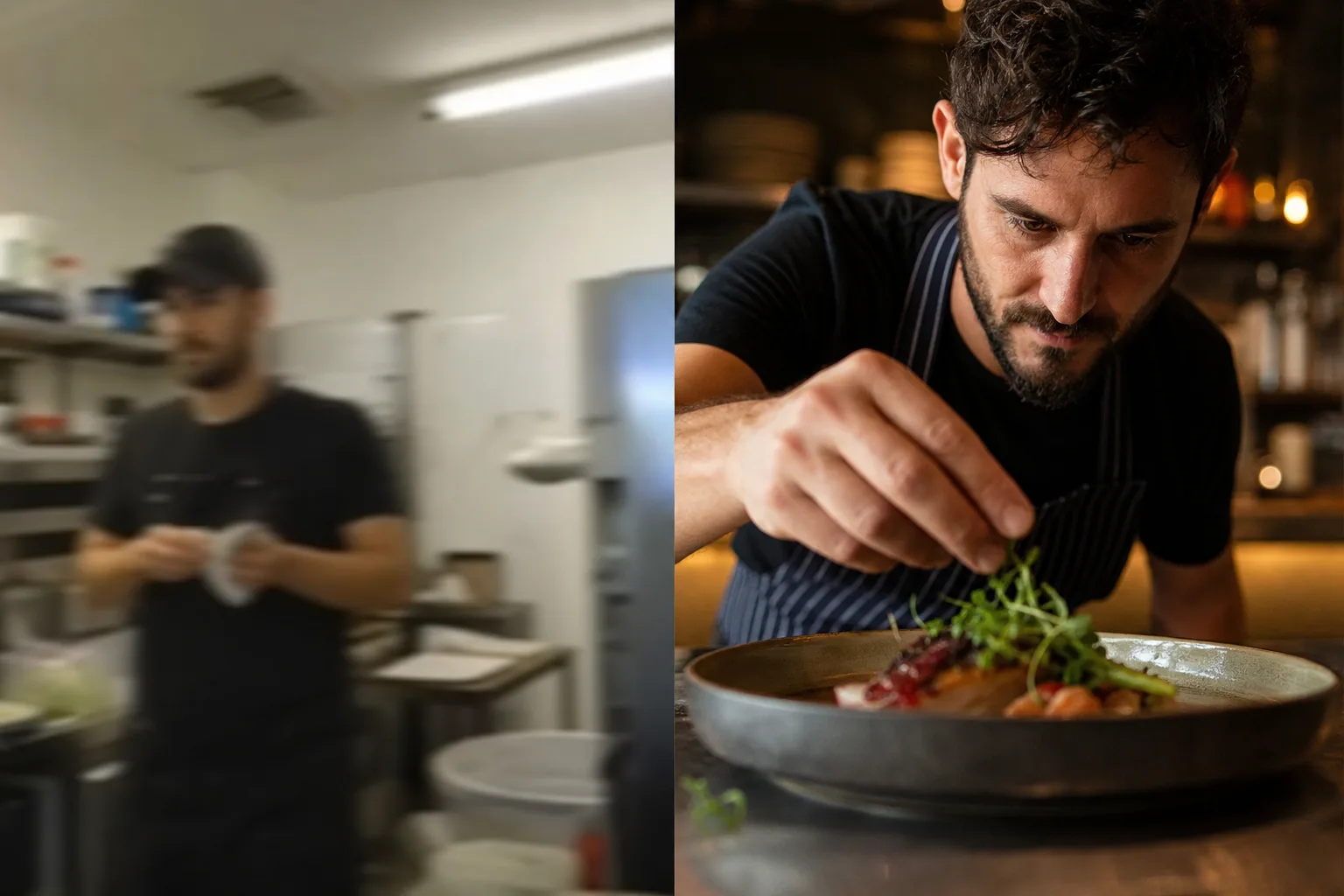
The best way to understand the power of a hook is to see concrete examples. In the following table, we'll compare weak, generic hooks with strong, specific ones for different types of businesses in Israel.
| Business Type | Weak Hook ('Before') | Strong Hook ('After') |
|---|---|---|
| Fitness Coach (Service) | Hey everyone, today we'll talk about ab exercises | This is the one mistake preventing you from getting a flat stomach |
| Jewelry Store (Product) | Check out our new necklace | How to wear 3 necklaces together without them tangling? Here's the trick |
| Business Consultant (Service) | My name is Danny and I'm a business consultant | I stopped doing this one thing and my revenue jumped by 30% |
| Pastry Shop (Product) | Our new cheesecake is for sale | Here's how to make a cheesecake that *never* collapses |
As you can see, the strong hooks spark curiosity, promise a solution to a problem, or present a desirable outcome. They are specific, direct, and make the viewer feel that the content is made just for them.
How to Tailor the Hook to Your Business: Service vs. Product
Do you sell a service or a product? The answer to this question affects which type of hook will work best for you. Each business type has a different narrative that works better.
- Service-based businesses (coaches, consultants, freelancers): Focus on showcasing expertise, building trust, and solving abstract problems. Hooks based on questions ("Are you also making this mistake?"), expert statements ("Here's the only way you'll succeed in managing your time"), or short personal stories work great.
- Product-based businesses (stores, restaurants, designers): Focus on visuals, demonstrations, and showcasing tangible benefits. Strong visual hooks (a surprising close-up shot), a 'before and after' process ("This is how we turned this balcony into a paradise"), or demonstrating an unconventional use of the product are especially effective.
A good hook doesn't sell the product, it sells the next 3 seconds.
A classic copywriting principle
Checklist: 8 Steps to Writing a Winning Hook
To make the process simple and clear, use the following checklist every time you sit down to write a script for a new video.
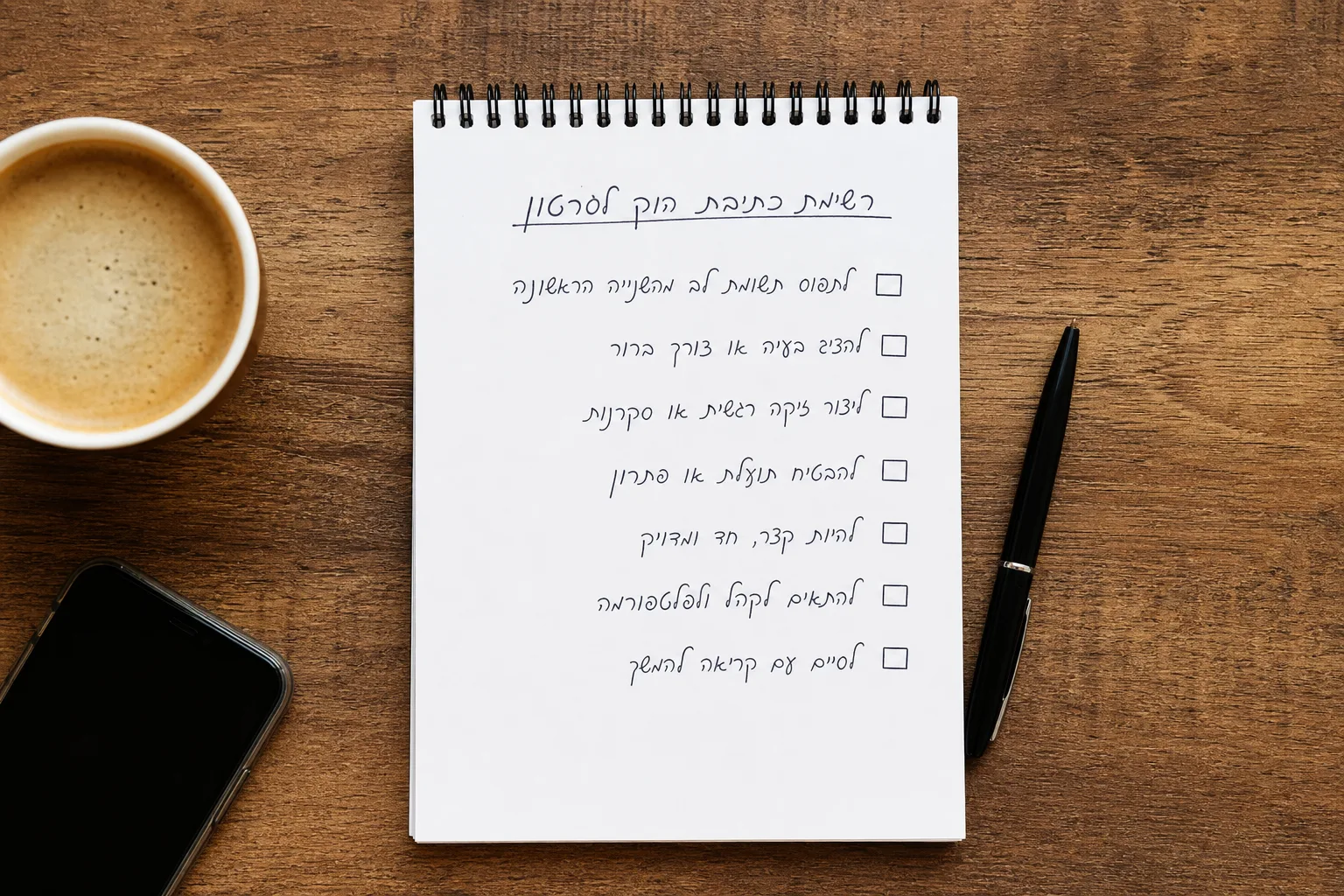
- Define your target audience precisely. Who are you talking to?
- Identify the main problem or desire the video addresses.
- Choose one hook type from the list we presented earlier.
- Write 3-5 different versions of the hook. Don't settle for the first one.
- Read the hooks out loud to check if they sound natural and flow well.
- Incorporate visual movement (like a quick zoom or hand gesture) or bold text in the first few seconds.
- Ensure the hook connects naturally to the rest of the video and delivers on its promise.
- Check the data after publishing and learn what worked best for your audience.
What to Do Now? Your Next Steps
Now that you understand the principles and techniques for writing a winning hook, it's time to apply them. The first step is to simply open your camera and try. Don't be afraid to make mistakes; the first few videos don't have to be perfect. The goal is to start, get feedback from your audience, and improve.
Remember, consistency is key. Set a realistic goal for yourself, like one short video a week. Use our checklist to build each script, and you'll be surprised how your confidence and results improve over time.
If you feel this process is still overwhelming or you simply don't have the time, you're not alone. Instead of racking your brain over writing hooks, the AI system at LunSoul Social can do all the work for you. It learns your business, writes scripts with custom-tailored hooks, and generates professional videos automatically. This way, you can focus on what you do best – running your business.