
To find clients in Facebook groups, you need to join the right groups where your audience is, provide real and consistent value through quality content like videos and tips, and create authentic interactions with members. The goal is to build trust and a reputation as an expert, which will naturally lead to inquiries and leads, without you having to "sell" aggressively.
This guide is for small and medium-sized business owners who want to use Facebook groups to get clients but are afraid of being seen as spammers or simply don't know where to start. We'll explain how to systematically produce video and image content, even if you don't have time or a desire to be on camera, and how to turn engagement into business results.
- Choose niche, active groups where your target audience is present.
- Focus on providing value and establishing expertise before any sales attempt.
- Short videos are the most effective tool for building trust and capturing attention.
- Consistency is key: post and comment regularly to stay top-of-mind.
- Use AI tools to produce professional video content quickly and easily.
While business pages on Facebook are experiencing a decline in organic reach, groups have become the main arena for authentic conversation. People join groups to ask questions, get recommendations, and find solutions to their problems. For a small business, this is a golden opportunity to showcase its expertise to a captive and targeted audience that has already expressed interest in the field.
Unlike paid advertising, which is often perceived as an interruption, valuable content in a group is welcomed. When you answer a group member's question or share a useful tip, you're not "selling"—you're helping. This approach builds a relationship and creates trust, which are the foundation of any future transaction.
The first and most critical step is to find the right groups. Look for groups where your ideal clients spend their time. If you're a local business, search for neighborhood or city groups. If you provide services nationwide, look for groups centered around a specific topic or interest (e.g., "Home Renovation & Construction - Professional Advice").
Before you post, carefully read the group rules. Many group admins prohibit blatant self-promotion. Ignoring the rules is the quickest way to get banned and tarnish your reputation. Understand what's allowed and what's not, and look for opportunities to post within the guidelines, such as in dedicated business promotion threads.
The only way to succeed in groups is to shift your mindset from "What can I sell?" to "How can I help?" People get frustrated when their posts don't appear in groups, often because the algorithm and admins identify them as spam. Value content, on the other hand, gets priority.
What is value content? It could be a quick tip, a short video guide explaining how to solve a common problem, a before-and-after picture with an explanation of the process, or a professional and detailed answer to a question from a group member. The goal is to position yourself as the go-to professional and trusted authority in your field.
| Post Type | Advantages | Disadvantages | When to Use |
|---|---|---|---|
| Short Video (up to 60 sec) | High engagement, builds trust, easy to consume | Requires production effort (unless using AI) | For explaining processes, giving tips, showing results |
| Image / Graphic Post | Visual and eye-catching, easy to produce | Less personal than video, can look too promotional | For quick tips, quotes, showing "before and after" |
| Text-Only Post | Allows for depth, encourages discussion, looks authentic | Hard to stand out in the feed, requires good writing | For asking questions, sharing case studies, starting a discussion |

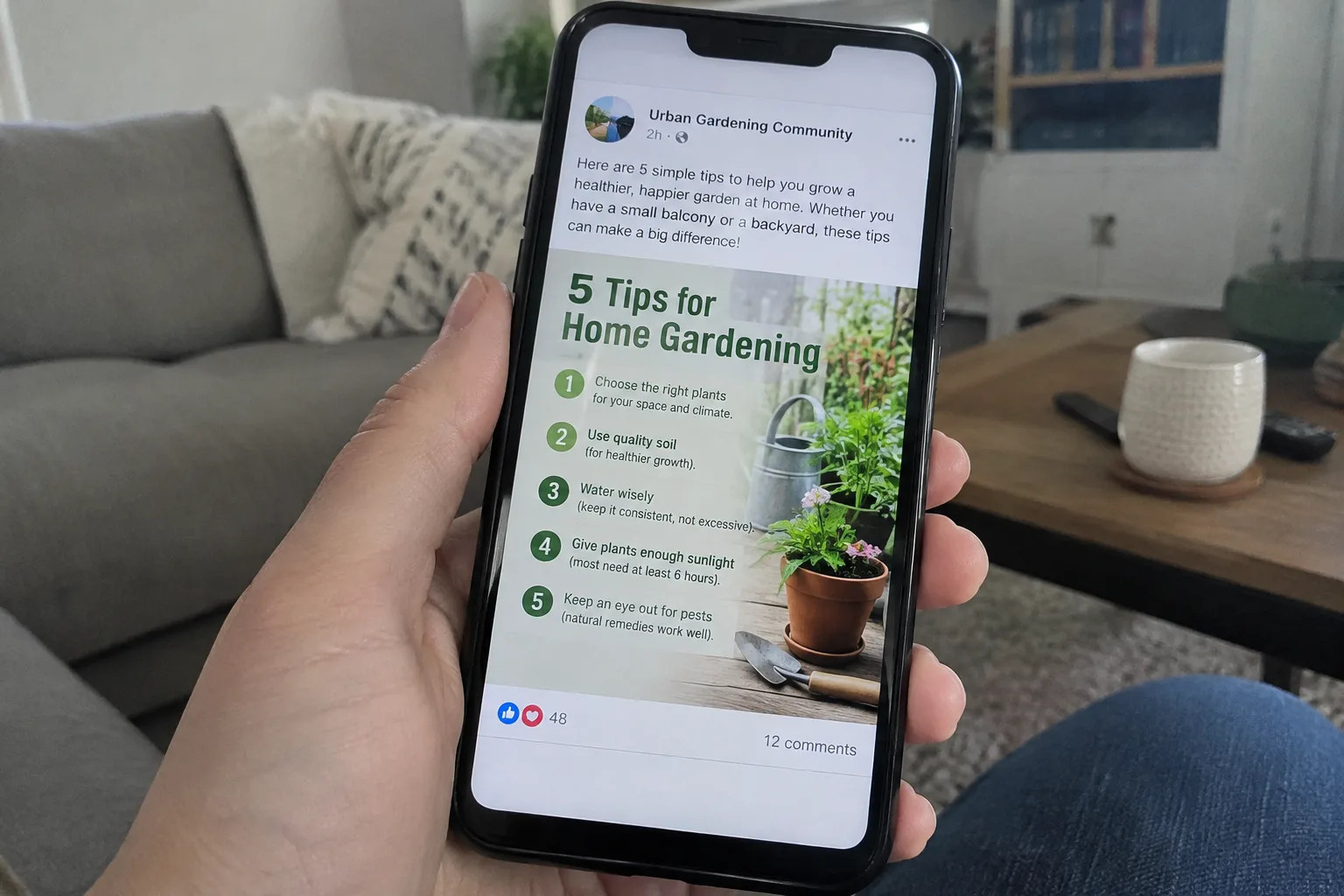
Many business owners ask, "I've created a business page, now what? What should I post?" The biggest challenge is consistently creating high-quality content, especially videos. Most of us don't like being on camera, don't have time to edit, and don't know what to say. This is where artificial intelligence (AI) technology changes the game.
Modern tools allow you to automatically generate professional videos and images, complete with a digital presenter and professional voiceovers. You provide the system with information about your business, and it suggests content ideas, writes the script, and produces a ready-to-publish video. This way, you can maintain a consistent and high-quality presence in groups without wasting precious time on production.
Success in Facebook group marketing isn't measured by the number of posts you publish, but by the amount of value you consistently provide.
Effective Content Strategy
Publishing posts is just the beginning. The real key to success is being an active and helpful member of the community. Dedicate 15-20 minutes a day to scan relevant groups, answer questions in your area of expertise, and respond to others' posts in a meaningful way.
When you comment, don't try to sell. Provide a genuine answer that helps the person asking. If your answer is detailed and professional, people will start to recognize you as an expert. They'll check out your profile, see what you do, and many will contact you privately when they need a service in your field.
After you've built trust and established yourself as an expert, it's time to reap the rewards. The goal isn't to post an aggressive "Special Offer!" but to gently guide interested people to contact you. Here are some effective ways to do this:
- Offer additional value: Publish a post with a useful tip, and at the end, write, "For those who want a detailed guide on this topic, comment 'me' below." Then, contact each commenter via private message with a link to the guide and start a conversation.
- Use a signature: In your professional comments, add your name, title, and business name at the end (if group rules allow). It's a subtle mention that doesn't feel salesy.
- Create a "question" post: Post an open-ended question related to your field, for example: "What's your biggest challenge in marketing your business right now?" The answers will give you insights and an opportunity to privately contact relevant people.
- Invite to a short consultation call: In response to a specific and complex question, answer briefly and professionally, and at the end, offer: "This is a complex topic. If you'd like, I can give you a 10-minute call to explain it more thoroughly at no cost."
- Share success stories: Post about a client you helped (preferably with a video or photo). Focus on the problem they had and the solution you provided. End with a sentence like, "I was happy to help Joe solve X. If you're facing a similar challenge, feel free to reach out for advice."
You've understood the principles, and now it's time to apply them. Instead of feeling overwhelmed, start with small, measurable steps that will get you on track and build a positive reputation in the groups.
- Step 1: Choose 3-5 groups: Focus on a small number of high-quality, active groups. Learn their dynamics and start participating regularly.
- Step 2: Set a weekly content goal: Decide to create 2-3 value posts per week. This could be a video tip, an image with an explanation, or sharing an interesting article with your personal insight.
- Step 3: Automate your content creation: To meet your goals without burning precious time, it's wise to use tools that streamline the process. A system like Lunsoul Social can automatically generate AI-based videos and images for you, including writing the text, so all you have to do is approve and publish.
Start today. Consistent application of these steps will transform Facebook groups from a frustrating marketing channel into a steady source of new leads and clients for your business.